Why Qigong Changed My Daily Rhythm — A Real Wellness Shift
For years, I struggled with low energy and mental fog, no matter how much I slept. Then I discovered qigong — not as a quick fix, but as a steady practice rooted in traditional Chinese medicine. I started small: five minutes each morning, focusing on breath and movement. Over time, something shifted. My days felt more balanced, my mind clearer. This isn’t about miracles — it’s about consistency. Here’s how routine qigong practice quietly transformed my well-being from the ground up.
The Hidden Cost of Modern Life: Why Our Bodies Crave Rhythm
In today’s fast-paced world, many women in their 30s, 40s, and 50s find themselves constantly on the move — managing households, careers, and family needs — yet still feel drained by midday. Persistent fatigue, difficulty concentrating, and a sense of emotional reactivity are not just signs of being “busy.” They are signals that the body’s internal balance has been disrupted. Traditional Chinese Medicine (TCM) explains this through the concept of qi (pronounced “chee”), the vital energy that flows through the body along pathways known as meridians. When qi flows smoothly and is well-balanced, the body functions optimally. But modern lifestyles — irregular sleep, constant digital stimulation, emotional stress, and sedentary habits — can cause qi to become stagnant or depleted.
This disruption affects more than just energy levels. It can influence digestion, sleep quality, immune function, and emotional resilience. Many women report feeling “wired but tired,” a state where the nervous system is overstimulated yet the body lacks true vitality. The issue is not a lack of effort, but a lack of rhythm. The human body thrives on regularity — predictable patterns of rest, movement, and nourishment. When these patterns are absent, even healthy habits like exercise or good nutrition may not deliver their full benefits. Wellness, in this context, is not solely about what we do, but how consistently we do it. The body responds best to gentle, repeated signals of safety and support, not sporadic bursts of intense activity.
TCM teaches that health is not the absence of illness, but the presence of harmony. This harmony is maintained through daily practices that align with natural cycles — waking with the sun, eating mindfully, moving gently, and resting deeply. When life pulls us away from these rhythms, small imbalances accumulate. Over time, they manifest as chronic low-grade symptoms that are often dismissed as “just aging” or “part of being a mom.” But these are early warnings. By restoring a simple, sustainable daily rhythm, we give the body a chance to rebalance. Qigong offers a practical, accessible way to do just that — not by adding more to the day, but by introducing mindful moments that anchor the nervous system and replenish energy.
What Is Qigong? More Than Just Movement
Qigong (also spelled chi kung) is an ancient practice that combines gentle physical movements, coordinated breathing, and focused intention to cultivate and balance qi. Unlike high-intensity workouts or complex fitness regimens, qigong is designed to be accessible to people of all ages and physical conditions. It does not require flexibility, strength, or prior experience. A person can practice qigong standing, sitting, or even lying down, making it ideal for those managing chronic pain, recovering from illness, or simply looking for a low-impact way to support wellness. The movements are slow, repetitive, and intentional — more like flowing through water than powering through a workout.
While qigong shares similarities with yoga and meditation, it has a distinct focus. Yoga often emphasizes physical postures (asanas) and flexibility, while meditation typically involves stillness and mental observation. Qigong bridges the two: it is moving meditation, where the body and breath work together to quiet the mind and activate the body’s self-healing mechanisms. Each movement is paired with a specific breathing pattern and mental focus, creating a holistic experience that integrates body, breath, and awareness. For example, a simple motion like raising the hands overhead while inhaling and lowering them while exhaling is not just physical — it is believed to stimulate the flow of qi along the central channel of the body, promoting clarity and calm.
Rooted in Traditional Chinese Medicine, qigong has been practiced for thousands of years as a method for preventing illness, enhancing vitality, and supporting longevity. It is not a religion or belief system, but a practical discipline grounded in observation and experience. Over decades, clinical and scientific interest in qigong has grown, with studies exploring its effects on stress, blood pressure, balance, and immune function. What makes qigong especially valuable for busy women is its adaptability. It can be practiced in a quiet corner of the home, during a work break, or even while waiting for water to boil. It asks not for hours of commitment, but for a few minutes of presence. This simplicity is its strength — a small daily investment with the potential for profound returns.
Why Routine Matters: The Science Behind Consistent Practice
The benefits of qigong are not the result of a single session, but of regular, repeated practice. This principle is supported by modern neuroscience and physiology. The brain and body respond to consistency by forming new neural pathways and physiological patterns. When a person practices qigong daily, even for just five to ten minutes, the nervous system begins to associate this routine with safety and regulation. Over time, the body learns to shift more easily from a state of stress (governed by the sympathetic nervous system) to a state of rest and repair (governed by the parasympathetic nervous system). This shift is reflected in measurable changes, such as reduced levels of cortisol (the primary stress hormone) and improved heart rate variability (HRV), a key marker of cardiovascular health and resilience.
Research on mind-body practices, including qigong, has shown consistent patterns of benefit. A 2020 meta-analysis published in the journal Frontiers in Psychology found that regular qigong practice was associated with significant reductions in anxiety, depression, and perceived stress. Another study in the American Journal of Health Promotion reported improvements in sleep quality and fatigue levels among middle-aged women who practiced qigong three times per week for eight weeks. These findings highlight a crucial point: the dose-response relationship in wellness. Small, frequent doses of mindful movement are often more effective than occasional, intense sessions. This is especially true for practices that work on the nervous system, where repetition builds familiarity and deepens the body’s ability to self-regulate.
Timing also plays a role. Practicing qigong at the same time each day — such as in the morning after waking — helps reinforce circadian rhythms and sets a calm tone for the day. The body begins to anticipate this moment of stillness, making it easier to enter a relaxed state. This consistency amplifies the subtle effects of qigong, which may not be immediately noticeable but accumulate over time. Like watering a plant daily, the results are not dramatic from one day to the next, but over weeks and months, the changes become clear. The key is not perfection, but persistence. Showing up, even when energy is low or motivation is lacking, sends a powerful message to the body: you are worth this care.
My First 30 Days: From Skepticism to Subtle Shifts
When I first started qigong, I didn’t expect much. I had tried meditation before and found it difficult to sit still. I worried that qigong would feel too slow or strange. But I committed to just five minutes each morning, using a simple audio guide that walked me through basic movements like “Lifting the Sky” and “Separating Heaven and Earth.” The first week was inconsistent — I missed two days, and on the days I did practice, my mind wandered constantly. I felt awkward moving my arms in slow motion, and I doubted whether anything was really happening.
But by the second week, I began to notice small changes. I was waking up more easily, without hitting the snooze button multiple times. My morning stiffness, especially in my shoulders and lower back, felt less intense. I also became more aware of my breath during the day — catching myself when I was holding it during stressful moments, and consciously releasing it. This newfound awareness extended to my posture; I found myself sitting taller at my desk and walking with more ease. These were not dramatic transformations, but they were real and tangible.
By the end of the 30 days, the most significant shift was in my emotional resilience. I didn’t feel overwhelmed by minor frustrations — a spilled coffee, a delayed appointment, a child’s tantrum. I still felt stress, but I was less reactive. I had developed a small internal pause between stimulus and response, a space where I could choose how to react. I started keeping a journal to track these changes, not with the goal of perfection, but to acknowledge progress. I wrote things like “felt calmer during traffic” or “took three deep breaths before responding to an email.” These notes became proof that something was shifting, even if it was invisible to others. The practice wasn’t fixing me — it was helping me reconnect with myself.
Building a Sustainable Qigong Habit: Practical Steps Anyone Can Take
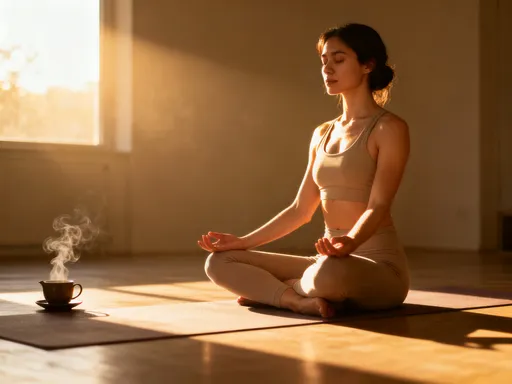
Starting a qigong practice doesn’t require special equipment, a large space, or hours of free time. The most important factor is simplicity. Begin by choosing a consistent time — many find mornings ideal, as it sets a calm tone for the day. Find a quiet corner where you won’t be interrupted, even if it’s just a few square feet. Wear comfortable clothing and stand barefoot or in soft shoes. Start with just five minutes, using a beginner-friendly routine that includes basic movements and breath coordination.
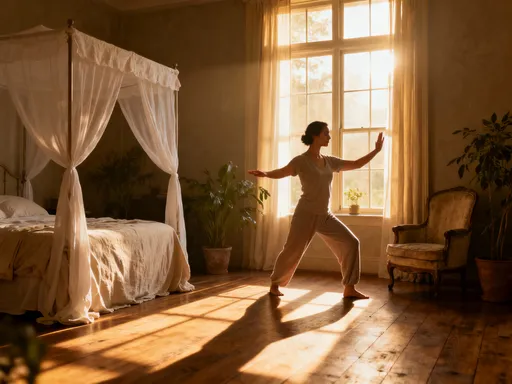
Two foundational forms are especially accessible: “Lifting the Sky” and “Separating Heaven and Earth.” In “Lifting the Sky,” you slowly raise your hands in front of you, palms up, as you inhale, then lower them as you exhale, visualizing energy flowing through your body. In “Separating Heaven and Earth,” one hand rises overhead while the other lowers toward the ground, creating a gentle stretch and promoting balance. These movements are not about physical exertion, but about cultivating awareness and flow. As you practice, focus on your breath — slow, deep, and rhythmic — and let your mind follow the motion.
To make the habit stick, pair qigong with an existing routine. For example, practice right after brushing your teeth or before making your morning tea. This “habit stacking” technique increases the likelihood of consistency. Avoid the temptation to do too much too soon; qigong is not about intensity. It’s better to practice for five minutes every day than for 30 minutes once a week. If you miss a day, don’t judge yourself — simply return the next day. Progress is not linear. Over time, you may naturally extend your practice to 10 or 15 minutes, but the foundation is daily presence.
How Qigong Supports Long-Term Wellness — Beyond the Morning Routine
The benefits of qigong extend far beyond the few minutes spent practicing each day. Over time, regular practice fosters deeper emotional regulation, increased body awareness, and greater resilience to life’s challenges. Women who maintain a consistent qigong routine often report feeling more centered, less reactive, and more in tune with their physical and emotional needs. This heightened awareness allows for earlier recognition of stress signals — tight shoulders, shallow breathing, irritability — and the ability to respond with simple, restorative actions.
From a TCM perspective, long-term qigong practice supports the body’s fundamental goals: balanced qi, strong immunity, and a calm spirit. When qi flows freely, the body’s natural healing processes function more efficiently. This can translate into fewer colds, better digestion, improved sleep, and a stronger sense of vitality. Unlike quick fixes or temporary solutions, qigong works at the foundational level, helping the body return to its natural state of harmony. It is not a cure for specific diseases, but a way to create the internal conditions in which health can thrive.
Perhaps the most profound shift is in how women begin to view self-care. Qigong is not about self-improvement — it is about self-respect. It is a daily act of honoring one’s body and mind, not because something is wrong, but because you are worth the attention. This mindset shift can ripple into other areas of life, encouraging healthier boundaries, more mindful eating, and greater compassion for oneself and others. The small daily investment in qigong compounds over time, much like interest in a savings account. What begins as a few minutes of movement becomes a lifelong practice of presence, balance, and well-being.
Integrating Qigong Into Modern Life — Without Adding Stress
One of the most common concerns women express is lack of time. “I can’t add one more thing to my day,” is a frequent sentiment. But qigong is not another task to check off — it is a way to pause and reset. The beauty of the practice is that it requires only 5 to 10 minutes, and it can be adapted to fit any lifestyle. For those with limited mobility, seated qigong is equally effective. Office workers can practice subtle versions at their desks — lifting the hands gently, breathing deeply, and releasing tension in the neck and shoulders. Audio guides, apps, and online videos make it easy to follow along, even for beginners.
The key is to release the pressure of perfection. Missing a day does not undo your progress. Practicing for two minutes is better than not practicing at all. The goal is not to achieve flawless form, but to show up with intention. Self-compassion is essential. When life becomes chaotic — a sick child, a work deadline, a family emergency — it’s okay to pause the routine. The practice will be there when you return. In fact, the ability to return without guilt is a sign of true resilience.
Qigong fits into modern life not by demanding more, but by offering a quiet counterbalance to its demands. It is a reminder that wellness is not found in busyness, but in moments of stillness. By choosing to begin the day with presence, you send a message to yourself: your well-being matters. This simple act can transform not only how you feel, but how you move through the world — with more grace, clarity, and inner strength.
Qigong didn’t transform my life overnight — but over time, it reshaped how I move, breathe, and begin each day. It’s not about achieving perfection, but practicing regularly, with presence. In a world that glorifies busyness, choosing a quiet, daily rhythm might be the most powerful wellness decision you make. This is not a trend, but a tradition — one breath, one movement, one day at a time.