How Yoga Meditation Changed My Wellness Game Without Any Gimmicks
I used to think yoga meditation was just stretching and deep breathing—kind of boring, honestly. But after struggling with low energy and constant stress, I gave it a real shot. Not the trendy, flashy version, but a simple, consistent practice rooted in traditional Chinese medicine principles. Within weeks, I noticed changes: better sleep, clearer focus, and a calm I hadn’t felt in years. This isn’t about perfection—it’s about showing up. Here’s how this gentle exercise program quietly transformed my daily life.
The Burnout That Led Me to Try Something New
For years, I prided myself on being someone who took care of her health. I ate balanced meals, avoided processed foods, and made time for regular workouts—usually high-intensity sessions that left me drenched in sweat and feeling accomplished. Yet, despite all the effort, I often woke up tired, mentally foggy, and emotionally frayed. It wasn’t until I found myself snapping at my children over small things, struggling to concentrate at work, and lying awake at night with a racing mind that I realized something was deeply off. I was doing everything “right,” but my body and mind were screaming for a different kind of care.
Conventional wellness advice didn’t seem to help. More protein? Already on track. Extra vitamins? Tried them. More sleep? I was in bed early, but my rest was restless. Even my doctor said my blood work looked normal, which was both reassuring and frustrating. The issue wasn’t physical in the way labs could detect—it was deeper, more subtle. That’s when a wellness coach, trained in both integrative health and traditional Chinese medicine (TCM), suggested I try yoga meditation not as a fitness trend, but as a restorative practice. She explained that what I was experiencing—chronic low-grade stress, poor recovery, emotional volatility—was a sign of energy imbalance, something TCM has addressed for thousands of years.
At first, I was skeptical. Sitting still? Breathing slowly? It sounded too passive to make a difference. But I was desperate for change, so I committed to a 30-day trial with one rule: no judgment. I wouldn’t measure progress by how flexible I became or how long I could hold a pose. Instead, I promised to show up each day and pay attention. No goals, no expectations—just presence. That small shift in mindset, from performance to participation, became the foundation of everything that followed.
Understanding the TCM Mind-Body Connection
Traditional Chinese medicine views health as a dynamic balance of energy, known as Qi (pronounced “chee”), flowing through the body along pathways called meridians. When Qi moves freely, we feel strong, clear, and emotionally stable. When it becomes blocked or stagnant—due to stress, poor habits, or emotional strain—the result is fatigue, tension, irritability, and a weakened immune response. Unlike Western medicine, which often treats symptoms in isolation, TCM looks at the whole person, recognizing that emotional stress can manifest as physical pain and that mental clarity depends on physical vitality.
Yoga meditation, when practiced with awareness, becomes a powerful tool for supporting Qi flow. Each mindful movement, each deep breath, acts like a gentle internal massage, encouraging energy to move through the meridians. For example, the Liver meridian, which in TCM governs emotional regulation and detoxification, often becomes congested during periods of stress. Poses that stretch the sides of the body, such as gentle twists or side bends, can help release that stagnation. Similarly, the Heart meridian is linked to joy and mental peace—practices that slow the breath and calm the nervous system support its optimal function.
The beauty of this approach is that it doesn’t require belief in unseen energies to see results. You don’t need to fully understand meridians to feel the difference when your shoulders drop after a few minutes of conscious breathing or when your mind quiets after a short meditative sequence. The body knows balance when it experiences it. What TCM offers is a framework—a language for understanding why certain movements and rhythms make us feel better, not just physically, but emotionally and mentally. It transforms yoga from a series of poses into a holistic wellness ritual.
Why Simple Practice Beats Intense Routines
In today’s wellness culture, there’s a pervasive myth that more effort equals better results. We’re told to push harder, sweat more, and strive for peak performance. While moderate physical activity is essential, the constant pursuit of intensity can backfire, especially when the body is already depleted. From a TCM perspective, overexertion depletes Qi rather than nourishing it. When we push too hard, we shift into a state of excess Yang—too much movement, too much heat, too much stimulation—without enough Yin to balance it. Yin represents rest, recovery, and internal nourishment. Without it, the body can’t repair, and the mind can’t reset.
This is where yoga meditation shines. It’s not about burning calories or building muscle; it’s about restoring equilibrium. A 20-minute session of slow, intentional movement and breathwork may seem underwhelming compared to an hour-long spin class, but its impact on long-term well-being can be far greater. Studies have shown that gentle, mindful exercise reduces cortisol levels—the primary stress hormone—more effectively than high-intensity workouts for individuals already under chronic stress. It activates the parasympathetic nervous system, the body’s “rest and digest” mode, which supports healing, digestion, and emotional regulation.
I learned this firsthand when I replaced one of my weekly intense workouts with a meditative yoga sequence. At first, I felt guilty—like I wasn’t doing enough. But within days, I noticed I was sleeping more soundly, my digestion improved, and I felt less reactive during stressful moments. The change wasn’t dramatic, but it was consistent. Over time, I began to crave the stillness, the quiet, the sense of being grounded. It wasn’t about what I was doing, but how it made me feel. That’s the power of low-effort, high-awareness practices: they’re sustainable, accessible, and deeply restorative.
My Daily 15-Minute Routine That Actually Works
One of the biggest barriers to starting a yoga meditation practice is the belief that it requires a lot of time, space, or expertise. I used to think I needed a full hour, a quiet room, and a perfect playlist. But the routine that made the most difference in my life takes just 15 minutes and can be done in a corner of my living room. The key isn’t duration or complexity—it’s consistency and attention.
Here’s how it works: I begin with a two-minute warm-up of gentle neck rolls and shoulder shrugs to release tension. Then, I move into three foundational poses, each held for two to three minutes with focused breathing. First is Cat-Cow, a flowing sequence that warms up the spine and encourages Qi to move along the Governing and Conception meridians, which run along the back and front of the body. The rhythmic motion also massages the internal organs, supporting digestion and relaxation.
Next is the Standing Forward Bend, which stretches the back of the legs and lower back—areas where stress often accumulates. In TCM, the Bladder meridian, the longest in the body, runs along the spine and back of the legs. This pose helps release tension in that pathway, promoting both physical ease and emotional release. I keep my knees slightly bent and let my head hang heavy, focusing on lengthening the breath.
The third pose is Legs-Up-the-Wall, a restorative inversion that requires nothing more than a clear space near a wall. I lie on my back and extend my legs vertically, letting gravity gently encourage blood and energy to flow downward. This pose is especially beneficial for calming the nervous system and reducing swelling in the legs—a common issue for women over 40 who spend long hours on their feet. I finish with five minutes of seated meditation, using diaphragmatic breathing: inhaling deeply through the nose, expanding the belly, and exhaling slowly. This type of breathing signals safety to the brain, helping to lower heart rate and quiet mental chatter.
To track progress, I keep a simple wellness journal. I don’t record physical achievements—no notes on how deep I bent or how still I sat. Instead, I jot down how I slept, my energy levels, and my emotional state. Over time, patterns emerged: on days I practiced, I felt calmer, made better food choices, and responded more patiently to my family. The changes were subtle but undeniable.
How Yoga Meditation Supports Natural Recovery and Resilience
One of the most profound shifts I experienced was in my body’s ability to recover. Before yoga meditation, I’d often feel wiped out after minor stressors—a busy day, a disagreement, even good news could leave me emotionally drained. Now, I notice a greater capacity to bounce back. I don’t react as quickly, and when I do feel overwhelmed, I have tools to reset. This resilience isn’t accidental; it’s the result of consistent nervous system regulation.
Scientific research supports what I’ve felt. Regular mindfulness and gentle movement practices have been shown to reduce cortisol levels, improve heart rate variability (a marker of stress resilience), and enhance immune function. When the body spends more time in the parasympathetic state, it can repair tissues, absorb nutrients, and regulate hormones more effectively. This is especially important for women navigating hormonal shifts in midlife, when the body’s ability to manage stress can decline.
From a TCM perspective, this resilience comes from harmonizing Yin and Yang. Yin is the quiet, nourishing, inward energy—represented by rest, sleep, and stillness. Yang is the active, outward energy—movement, speech, and action. Modern life tends to overemphasize Yang, leaving Yin depleted. Yoga meditation restores that balance by introducing deliberate stillness into the day. It’s not about doing nothing; it’s about doing something that replenishes. Over time, this rhythm of movement and pause strengthens the body’s natural ability to adapt and heal.
It’s important to emphasize that this isn’t a quick fix. There’s no dramatic weight loss, no viral transformation. The benefits unfold slowly, like a plant growing underground before it breaks the surface. But once they take root, they’re lasting. This practice didn’t change my life overnight—it changed how I live every day.
Common Missteps and How to Avoid Them
Like any new habit, yoga meditation comes with pitfalls, especially when we approach it with the wrong mindset. One of the most common mistakes is treating it like a performance. I used to focus on how far I could fold forward or how long I could hold a pose, comparing myself to images online. But yoga isn’t about flexibility—it’s about awareness. When we push too hard, we create tension instead of release, and we disconnect from the body’s subtle signals. The goal isn’t to look a certain way; it’s to feel more connected, more at ease.
Another misstep is expecting immediate results. I almost quit in the first week because I didn’t feel different. But wellness isn’t measured in days—it’s measured in months and years. The benefits of yoga meditation are cumulative. They build quietly, like interest on a savings account. Patience is essential. It’s better to practice for five minutes every day than for an hour once a week.
Finally, many people ignore their body’s limits, pushing through pain or fatigue because they think more is better. In TCM, this is seen as violating the principle of moderation. The body speaks through sensation—tightness, warmth, ease, discomfort. Learning to listen is part of the practice. Some days, my routine might be shorter or gentler because I’m tired or stressed. That’s not failure; it’s wisdom. Using a journal to reflect on how I feel each day has helped me tune in and adjust without guilt.
Making It Stick: Building a Habit That Feels Good, Not Forced
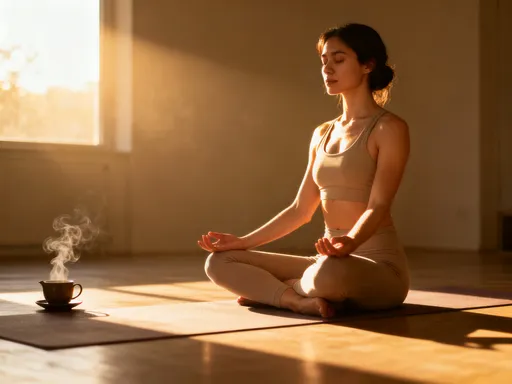
The secret to lasting change isn’t motivation—it’s integration. I’ve found that linking my yoga meditation practice to an existing habit makes it far more sustainable. For me, it’s after my morning tea. That warm cup signals the start of my day, and now, so does my practice. I don’t need to decide whether to do it; it’s simply part of the rhythm. Habit stacking, as it’s called, removes the mental resistance that often derails new routines.
I’ve also created a small, inviting space in my living room—a corner with a mat, a cushion, and a salt lamp that casts a soft glow. I don’t need a dedicated studio; this little area is enough to shift my mindset. Lighting the lamp becomes a ritual, a signal to the brain that it’s time to slow down. Environment shapes behavior, and a calm space encourages calm actions.
Reminders help too, but I’ve learned to use gentle ones—like a note on my mirror or a chime on my phone with a kind message: “Time to breathe.” I avoid harsh alarms or guilt-based prompts. This practice is a gift, not a chore. Over time, my internal dialogue shifted from “I have to do this” to “I get to do this.” That small change in language reflects a deeper shift in identity—from someone forcing herself to be healthy to someone who values her well-being enough to make space for it.
Wellness isn’t about drastic overhauls or perfect discipline. It’s about showing up, day after day, with kindness and curiosity. Yoga meditation, rooted in the wisdom of traditional Chinese medicine, taught me that true health isn’t found in intensity, but in intention. It’s not about how much you do, but how deeply you feel it. Small, consistent actions—15 minutes of mindful movement, a few deep breaths, a moment of stillness—can quietly transform your energy, your mood, and your life. This journey began with skepticism, but it led to a sustainable, joyful practice that supports my body, mind, and spirit. If you’re feeling drained, overwhelmed, or stuck, consider giving gentle movement a chance. It might not look like the wellness trends you’ve seen, but it could be exactly what your body has been asking for. Always consult with a healthcare provider before starting any new wellness practice, especially if you have pre-existing health conditions.