Lost in Time: Where Ancient Art Lives in Every Stone
Have you ever walked through a city that feels like a living museum? Gyeongju, South Korea, is exactly that—a place where centuries-old temples, royal tombs, and Buddhist masterpieces aren’t locked behind glass but breathe alongside modern life. I wandered its quiet paths and misty hills, stunned by how deeply art and culture shape every corner. This isn’t just history—it’s a living, whispering presence. The air carries the scent of pine and incense, the rustle of silk hanbok skirts brushing stone pathways, and the distant chime of temple bells echoing through mountain valleys. In Gyeongju, time doesn’t merely pass; it lingers, folded into the landscape like ancient paper inscribed with forgotten prayers.
Gyeongju as a Cultural Sanctuary
Gyeongju stands as a rare jewel in the crown of cultural preservation, once the proud capital of the Silla Kingdom that ruled much of the Korean Peninsula for nearly a thousand years, from 57 BCE to 935 CE. Unlike many ancient capitals reduced to fragments, Gyeongju remains remarkably intact, its historical layers visible in nearly every district. Recognized as a UNESCO World Heritage site under the designation “Gyeongju Historic Areas,” the city encompasses over a dozen protected zones, including temple complexes, archaeological sites, and scenic natural landscapes shaped by centuries of spiritual and civic design. What makes Gyeongju exceptional is not merely its age but its continuity—modern homes nestle beside royal tombs, schoolchildren pass stone guardians on their way to class, and weekend cyclists glide past relics that have watched the seasons turn for more than a millennium.
The city’s atmosphere is one of serene reverence, not grand spectacle. There are no towering replicas or theme-park recreations; instead, authenticity prevails. Walking through Gyeongju is akin to stepping into a hand-painted scroll where past and present are not separated by barriers but flow into one another. The morning light filters through ginkgo trees planted centuries ago, illuminating moss-covered stone lanterns with a golden hush. In the distance, the soft chant of monks at prayer drifts from a temple nestled in the hills. This seamless integration of heritage and daily life invites visitors to experience history not as a distant narrative but as a felt reality, where the weight of centuries rests gently on the present.
The Art of Buddhism: Temples and Sculptures That Speak
At the heart of Gyeongju’s spiritual and artistic legacy lies Bulguksa Temple, a masterpiece of Silla Buddhist architecture and a UNESCO World Heritage site in its own right. Built in the 8th century under the patronage of Prime Minister Kim Dae-seong, the temple was designed as a physical manifestation of the Buddhist paradise. Its elevated stone terraces, wooden halls, and intricately carved bridges symbolize the journey from the earthly realm to enlightenment. The Dabotap and Seokgatap pagodas—one ornate, one simple—stand as iconic representations of duality in Buddhist thought: complexity and purity, form and emptiness. Visitors often pause before them, struck by the harmony of proportion and symbolism, a testament to the Silla artisans’ deep philosophical understanding.
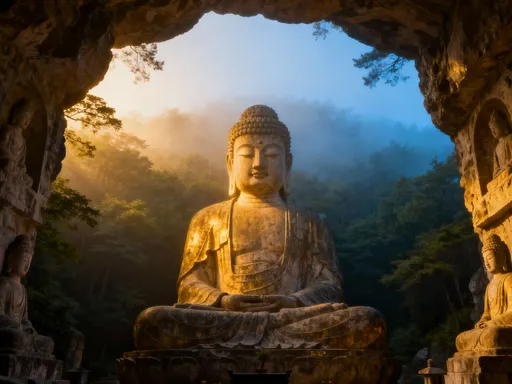
A short climb up Mount Toham leads to Seokguram Grotto, an engineering and artistic marvel carved directly into the mountainside. The grotto houses a majestic granite Buddha seated in meditation, his serene face illuminated by the first rays of sunrise. The play of light inside the domed chamber is no accident; ancient architects aligned the structure so that dawn light would gradually reveal the Buddha’s features, creating a transcendent experience for pilgrims. The craftsmanship is astonishing—the folds of the robe, the calm curve of the lips, the downward gaze suggesting infinite compassion. This is not merely a statue but a spiritual presence, shaped by human hands yet radiating a stillness that seems beyond time. Visitors often report a profound sense of peace, as if the mountain itself is breathing in rhythm with their own quieted thoughts.
Beyond these renowned sites, smaller temples and stone reliefs dot the outskirts of the city, each bearing witness to the depth of Buddhist influence in Silla culture. Stone pagodas, some weathered by centuries of wind and rain, stand in quiet fields, their tiers diminishing toward the sky like steps to the divine. The artistry of these pieces lies not only in their form but in their purpose: to inspire reflection, devotion, and a connection to something greater than the self. In a world increasingly defined by speed and distraction, these monuments offer a rare invitation to slow down, to look closely, and to listen.
Royal Legacy: Tombs, Burial Mounds, and Forgotten Kings
Scattered across Gyeongju like emerald domes in a green sea are over 100 tumuli—the burial mounds of Silla royalty and aristocracy. These grass-covered mounds, many of them unexcavated, form vast parks where history and nature coexist in quiet harmony. The most famous of these is Tumuli Park, a sprawling expanse where families picnic beneath ancient pines and children play near the resting places of kings who ruled more than a thousand years ago. The mounds vary in size, some large enough to dominate the skyline, others small and modest, yet each carries the weight of a life once celebrated with gold crowns, jade ornaments, and elaborate funeral rites.
One of the most accessible and revealing is Cheonmachong Tomb, excavated in the 1970s and found to contain over 12,000 artifacts, including a remarkably preserved wooden chamber and the famed “Heavenly Horse” painting on a birch bark saddle flap. The discovery offered unprecedented insight into Silla burial customs and elite life. Today, visitors can descend into a reconstructed chamber that mirrors the original, walking through a space designed to mirror the king’s home in the afterlife. The dim light, the scent of aged wood, and the silent display of replicas—crowns of twisted gold, glass beads, iron weapons—evoke a sense of intimacy with the past, as if one has been granted a quiet audience with a long-gone ruler.
The construction of these mounds was a feat of engineering and devotion. Built with layers of stone, wood, and earth, they were designed to protect the deceased and symbolize their status. Unlike the pyramids of Egypt, which tower over the landscape, Silla mounds blend into the hills, reflecting a cultural emphasis on harmony with nature. Archaeologists believe many still hold undiscovered treasures, but out of respect and preservation, most remain untouched. Walking among them, one feels a deep sense of continuity—the same sun that warmed the backs of mourners in the 6th century now glints off the dew on the grass, connecting generations through light and memory.
Living Culture: Traditional Craft and Modern Interpretation
While Gyeongju honors its past, it does not live in it. Across the city, traditional crafts are not relics but living practices, passed down through generations and reimagined for today’s world. In the narrow alleys of the old town, pottery workshops invite visitors to shape clay on the wheel, learning the delicate art of celadon—a pale green-glazed ceramic perfected during the Goryeo period but rooted in Silla techniques. The process is meditative: centering the clay, lifting the walls, smoothing the surface. When the piece is fired, its subtle crackle glaze emerges, a fingerprint of fire and time, much like the ancient shards displayed in local museums.
Elsewhere, hanbok experience studios allow guests to don the elegant, flowing robes of Korea’s traditional dress. The act of wearing hanbok—tying the jeogori jacket, draping the full skirt, securing the ribbon at the waist—becomes a quiet ritual of transformation. As women walk through temple courtyards or garden paths in these vibrant garments, they participate in a living tradition, their movements echoing centuries of grace and formality. For many, especially older visitors, the experience evokes nostalgia, a reconnection with cultural roots that may have faded in modern life.
In restored hanok villages, traditional music sessions bring ancient melodies to life. The soft resonance of the gayageum, a 12-string zither, blends with the breathy tone of the daegeum flute, creating a soundscape that feels both intimate and timeless. Locals and travelers gather on wooden verandas, sipping barley tea as the music drifts into the evening air. These moments are not performances for tourists but genuine expressions of cultural continuity, where art is not consumed but shared. Such experiences remind us that heritage is not static—it breathes, evolves, and finds new meaning in the hands of those who cherish it.
Nature Woven with History: The Sacred Geography of Gyeongju
Gyeongju’s beauty lies not only in its monuments but in the way they are embedded within the natural world. The city was deliberately designed according to principles of pungsu, the Korean interpretation of feng shui, which emphasizes harmony between human settlements and the surrounding landscape. Mountains cradle the city like protective arms, rivers trace gentle curves through the valleys, and the placement of temples and tombs follows the flow of energy, or gi, believed to nourish life and spirit. This sacred geography transforms Gyeongju into more than a historical site—it becomes a living organism, where every hill and stream holds meaning.
Namsan, or “South Mountain,” is the spiritual heart of this landscape. Rising gently to the south of the city, it is dotted with over 80 Buddhist sculptures and temple ruins hidden along forested trails. Hiking through Namsan is like wandering through an open-air sanctuary. A turn in the path reveals a stone Buddha seated in quiet contemplation, half-covered in moss, its face softened by time. Further on, a granite bodhisattva stands beneath a canopy of maple trees, its hands folded in mudra, untouched by noise or crowds. These images were not meant for grand display but for solitary meditation, placed where pilgrims could encounter them in moments of solitude and awe.
The mountain’s trails are well-marked but never crowded, preserving a sense of discovery. Spring brings cherry blossoms that drift like snow onto stone carvings; autumn paints the slopes in fiery reds and golds. Even in summer, the forest offers cool shade and the sound of cicadas humming through the trees. For many visitors, especially women seeking respite from the pace of urban life, Namsan becomes a place of reflection and renewal. The act of walking—of placing one foot after another on ancient paths—becomes a form of pilgrimage, a way to align the rhythm of the body with the stillness of the earth.
Culinary Roots: Flavors Steeped in Tradition
No journey into Gyeongju’s soul is complete without tasting its food. The city’s cuisine reflects the simplicity, seasonality, and reverence for nature that define its culture. At local markets, baskets overflow with fresh perilla leaves, wild greens, and mountain herbs gathered from the surrounding hills. Fermented soybean paste, or doenjang, simmers in clay pots, its rich aroma rising from family kitchens. Meals are modest but deeply satisfying—steamed millet rice cakes wrapped in leaves, braised radish with chili, and clear soups made with dried anchovies and zucchini.
One of Gyeongju’s most beloved treats is Hwangnam bread, a small, round pastry filled with red bean paste and baked until golden. First created in the 1930s, it has become a symbol of the city, its flaky crust and sweet filling offering comfort to visitors of all ages. Found in small bakeries near the train station, it is often purchased as a gift, a edible token of memory. For those seeking a deeper culinary experience, temple food programs offer a chance to eat as monks do—plant-based, seasonal, and prepared with mindfulness. Each dish is served in precise portions, arranged with care, encouraging gratitude and presence.
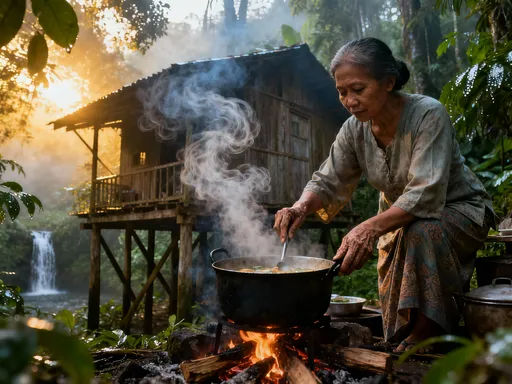
Dining in Gyeongju is rarely a hurried affair. Meals unfold slowly, shared with companions or enjoyed in quiet solitude. At family-run eateries, grandmothers in aprons serve dishes with a smile, asking if the flavor is to one’s liking. There is a sense of hospitality that feels genuine, not performative—a warmth that lingers long after the last bite. In these moments, food becomes more than sustenance; it becomes a bridge between past and present, between strangers and neighbors, between the body and the land that feeds it.
Traveler’s Guide: How to Experience Gyeongju Deeply
To truly connect with Gyeongju, one must travel slowly. The city rewards those who linger, who wander without urgency, who listen more than they speak. The best time to visit is during spring (April to early May) or autumn (late September to November), when the weather is mild and the natural scenery reaches its peak. Summer can be humid, and winter, while quiet and beautiful, may limit outdoor exploration. A three-day itinerary allows enough time to experience the major sites without rushing: Day One at Bulguksa and Seokguram; Day Two exploring the tumuli parks and museums; Day Three hiking Namsan and visiting craft workshops.
From Seoul, Gyeongju is easily reached by KTX high-speed train, taking just over two hours to the nearby city of Dongdaegu, followed by a local train or bus. Within Gyeongju, biking is one of the most enjoyable ways to get around. Rental shops offer comfortable bicycles, and well-marked paths connect major attractions, allowing visitors to glide through history at a gentle pace. Accommodation options range from modern hotels to traditional guesthouses and temple stays, where guests can participate in morning meditation and vegetarian meals.
For a richer understanding, hiring a local guide—especially one certified by the Korea Tourism Organization—can make a significant difference. Guides offer context, share stories, and point out details that might otherwise go unnoticed, such as the symbolic meaning of a roof’s curve or the significance of a particular carving. It is also important to travel respectfully: avoiding loud conversations at sacred sites, refraining from touching ancient stones, and following designated paths to protect fragile ruins. During peak holidays like Chuseok or Lunar New Year, some sites can become crowded, so early morning visits are recommended for a more peaceful experience.
Why Gyeongju Stays With You
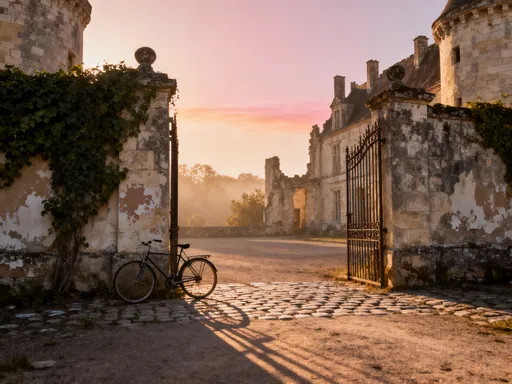
Gyeongju does not announce itself with fanfare. It does not need flashing signs or grand entrances. Instead, it reveals itself in quiet moments: the way sunlight touches a stone Buddha’s hand, the sound of a bicycle bell ringing down an ancient street, the taste of warm Hwangnam bread on a cool morning. It is a city that lives in the details, where art is not confined to galleries but is etched into the very stones beneath your feet. To walk through Gyeongju is to understand that culture is not something preserved behind glass—it is carried in gestures, flavors, and silences.
For women who have spent years nurturing families, managing homes, and holding communities together, Gyeongju offers a rare gift: a space to pause, to reflect, to remember that beauty and meaning are not luxuries but necessities. It reminds us that history is not a distant subject but a living thread, woven into the fabric of daily life. In a world that often feels fragmented and fast, Gyeongju stands as a testament to continuity, to the quiet power of tradition, and to the enduring human desire to create, honor, and remember.
Those who visit do not leave unchanged. They carry Gyeongju with them—not in souvenirs, but in memory. In the way they pause to notice a blooming flower, in the care they take in preparing a meal, in the stories they tell. Gyeongju does not shout its history. It whispers. And those who listen, carry it home.